
Food Safety
Quality Above All
If Delhaize offers you so much more, it’s because, for every Delhaize-branded product, we remain uncompromising. We first pay special attention to composition and nutritional information, with both internal and external experts. Then, we demand the best taste and ease of use, while prioritizing energy efficiency. But quality at Delhaize is also—and above all—a series of uncompromising checks on traceability.
Checks on Checks
Qualified and independent inspectors carry out regular checks throughout the production chain, whether at Delhaize or at the producer. These checks are visual and manual, with samples taken for in-depth analyses. Delhaize stores are not spared either.
We Know Each of Our Producers
This is essential. Quality begins at the producers. They fully assume their responsibilities, applying our strict criteria in their production methods and pursuing their work with passion.
Origin is Protected
From its origin to your shopping cart, every Delhaize product is monitored at every stage of the chain, without exception. This ensures we deliver products with the best guarantees of quality, taste, freshness, and safety. This goal is achieved through close and open cooperation between all parties involved.
Transparency is Required
The weakest link defines the strength of the chain. That’s why our quality requirements apply at all stages of production, without compromise. Every participant is responsible for the product’s quality and must define, communicate, and follow their own codes of good practice.
Quality Evolves
So do our efforts! We constantly improve our quality criteria. They follow scientific progress, guided by our experts, respecting and even anticipating legislative changes. And if they are constantly questioned, it’s to better meet your expectations!
In the Store
At Delhaize, maintaining the cold chain is an absolute priority. Once in our supermarkets, each product is kept at a specific temperature.
At Home
We pay close attention to the quality and optimal preservation of food, from production to the store, to offer you fresh and delicious products. It’s then up to you to follow basic steps to maintain the quality of the products you purchase.
Respect the Cold Chain
Always bring a reusable insulated bag for frozen and refrigerated items. Finish your shopping with frozen and chilled products so they spend less time in your cart. Once home, store your groceries immediately in the fridge or freezer in the correct location.

Organize Your Fridge!
By following the proper fridge storage guidelines (see below), you will ideally preserve the freshness, taste, and nutritional qualities of your products. But do not keep leftovers too long, because while cold slows bacterial growth, it doesn’t stop it!
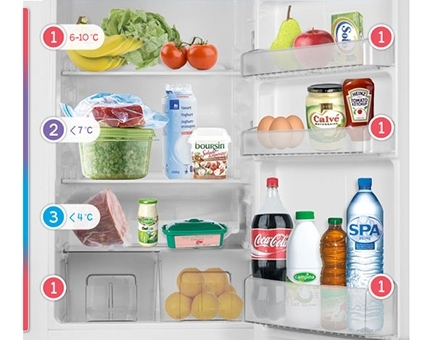
1. 6–10°C, fridge door, top or bottom shelf:
- Eggs
- Butter
- Milk
- Beverages
- Condiments
- Opened fruit juices
- Fresh fruits and vegetables
- Ripening cheeses
2. Max. 7°C, second shelf from the top:
- Cooked fruits and vegetables
- Homemade meats and fish
- Homemade preparations
- Yogurts
- Cheeses
3. Max. 4°C, third shelf:
- Fresh juices
- Packaged salads
- Poultry
- Meat
- Fish
- Cream
- Prepared deli dishes
- Dairy desserts
- Cold cuts
- Products in the process of defrosting
Avoid Cross-Contamination
Cooked products must not come into contact with raw products or utensils used for raw preparation. For example, never place cooked chicken on the tray where it was raw. This applies both when cooking and organizing your fridge.
Read Labels
Always check expiration and storage dates on packaging. Follow the “first in, first out” method: first in, first out!
From Freezer to Fridge
Never thaw food at room temperature and never refreeze thawed food. Always thaw in the fridge, e.g., the day before preparation, or under cold running water, or even in the microwave.
When in Doubt
Throw it away! Leftovers should not remain in the fridge for more than 3–4 days. Beyond that, it’s safer to discard them.
